
Warts are one of the most common and most stubborn skin concerns people deal with. They’re harmless in most cases, but they can be embarrassing, uncomfortable, and surprisingly difficult to get rid of on your own. With so many over-the-counter remedies and DIY hacks circulating online, it’s easy to try the wrong approach and end up with irritated skin, scarring, or a wart that keeps coming back.
This blog breaks down what warts actually are, why safe removal matters, and the dermatologist-backed treatment options that deliver real, lasting results.
What Are Warts?
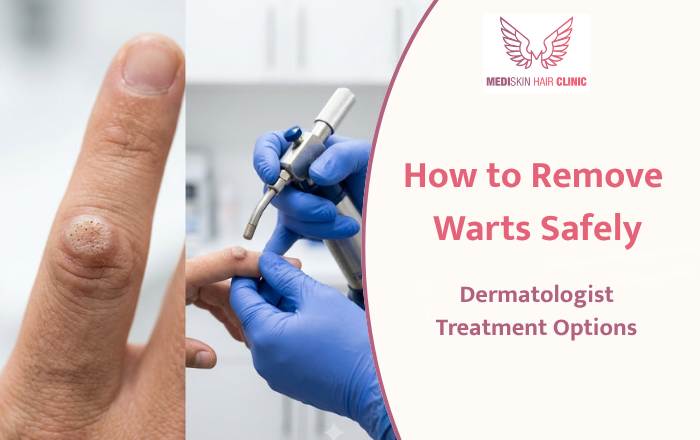
Warts are small, rough skin growths caused by the human papillomavirus (HPV). There are more than 100 strains of HPV, and different strains tend to cause different types of warts, including:
- Common warts – usually found on hands and fingers
- Plantar warts – appear on the soles of the feet and can be painful when walking
- Flat warts – smaller and smoother, often appearing on the face or legs
- Filiform warts – thread-like growths often found around the mouth, eyes, or nose
- Genital warts – a sexually transmitted type requiring specialized treatment
Warts spread through direct contact or contact with contaminated surfaces, and they can also spread to other parts of your own body if left untreated or picked at.
Why You Shouldn’t Try to Remove Warts Yourself
It’s tempting to reach for a needle, nail clipper, or a random home remedy you found online, but self-removal comes with real risks:
- Infection – Cutting or picking at a wart can introduce bacteria into the skin.
- Scarring – Improper removal often leaves permanent marks, especially on sensitive areas like the face.
- Spreading the virus – Picking at a wart can transfer HPV to other parts of your body or to other people.
- Incomplete removal – Many DIY methods only remove the visible surface, leaving the wart’s root intact so it grows back.
- Delayed diagnosis – Some skin growths that look like warts are actually something else entirely, including skin conditions that require different treatment.
A dermatologist can accurately diagnose the type of wart you have and recommend a treatment suited to its size, location, and severity something home remedies simply can’t offer.
Dermatologist Treatment Options for Wart Removal
Dermatologists have access to a range of clinical treatments that are far more effective and safer than at-home approaches. Here are the most commonly used options:
1. Cryotherapy (Freezing)
Liquid nitrogen is applied directly to the wart, freezing the tissue and causing it to blister and fall off over the following days. This is one of the most common in-office treatments and often requires multiple sessions for complete removal.
2. Electrosurgery and Curettage
This involves numbing the area, then burning the wart with an electric current before scraping it away. It’s typically used for larger or more resistant warts.
3. Laser Treatment
Lasers target the blood vessels feeding the wart, cutting off its supply and causing it to die off. This method is especially useful for stubborn plantar warts or warts that haven’t responded to other treatments.
4. Chemical Peels or Topical Prescription Treatments
Stronger, prescription-strength versions of salicylic acid or other topical agents can be applied under dermatologist supervision, offering more consistent results than over-the-counter products.
5. Immunotherapy
For persistent or widespread warts, dermatologists may use treatments that stimulate the immune system to fight off the HPV virus causing the growths.
6. Minor Surgical Excision
In select cases, a dermatologist may surgically cut out the wart, particularly if other treatments haven’t worked.
Your dermatologist will choose the right method or combination of methods based on the wart’s type, size, location, and how your skin responds to treatment.
What to Expect During Treatment
Most in-clinic wart removal procedures are quick, typically completed within a single visit, though some treatments like cryotherapy may require follow-up sessions spaced a few weeks apart. Mild redness, blistering, or tenderness at the treatment site is normal and generally resolves within a few days to a couple of weeks.
Your dermatologist will also guide you on aftercare, such as keeping the area clean and avoiding picking at healing skin, to reduce the risk of scarring or reinfection.
Tips to Prevent Warts From Coming Back
- Avoid touching or picking at existing warts
- Keep feet dry and wear sandals in public showers or pools
- Don’t share towels, razors, or nail clippers
- Boost skin health with proper hygiene and a strong immune system
- Treat warts early before they spread or multiply
When to See a Dermatologist
While small warts sometimes resolve on their own, it’s best to see a dermatologist if you notice:
- Warts that are painful, spreading, or increasing in number
- Warts on the face or genital area
- Warts that bleed, change color, or look unusual
- No improvement after trying over-the-counter treatments
- Warts in individuals with diabetes or a weakened immune system
Early professional treatment leads to faster, safer results and lowers the chances of scarring or recurrence.
Frequently Asked Questions
Q1: Are warts contagious?
A: Yes. Warts are caused by HPV and can spread through direct skin contact or contact with contaminated surfaces like shared towels or shower floors.
Q2: Is wart removal painful?
A: Most dermatologist treatments involve mild discomfort at most, and options like numbing agents can be used for more sensitive areas.
Q3: How many sessions are needed to remove a wart completely?
A: This depends on the treatment method and the wart’s size and location some clear up in one session, while others, especially plantar warts, may need multiple visits.
Q4: Can warts come back after treatment?
A: Yes, warts can recur if the root isn’t fully treated or if you’re re-exposed to HPV, which is why professional treatment and good skin hygiene matter.
Q5: Is it safe to remove warts at home?
A: Over-the-counter treatments can work for small, simple warts, but larger, painful, or facial warts should be evaluated and treated by a dermatologist to avoid scarring or incomplete removal.
Have questions? We’re just a message away! Contact us on WhatsApp — Click Here to Chat with Us
Get Expert Wart Removal at MediSkin Hair Clinic
Looking for safe and effective wart removal? Visit MediSkin Hair Clinic in Kharadi, led by Dr. Shridevi Lakhe, a trusted Dermatologist and Cosmetologist with over 15+ years of experience. We offer personalized wart removal treatments using advanced, dermatologist-approved techniques to help you achieve healthy, clear skin. Conveniently located for patients in Kharadi, Hadapsar, and nearby areas, our clinic is committed to providing safe, effective, and compassionate care.