
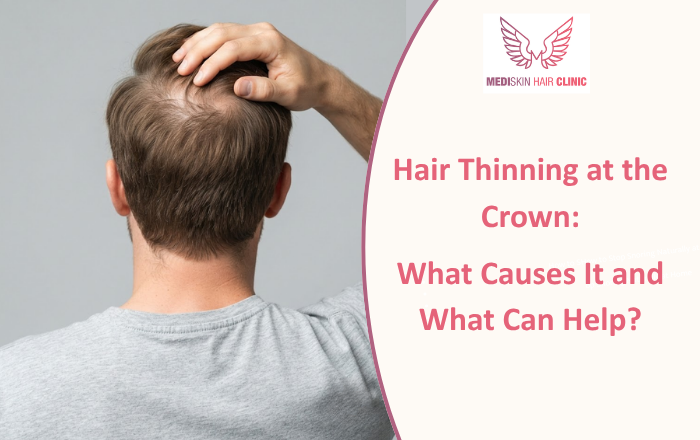
Noticing that your scalp is becoming more visible around the crown can be concerning, especially when the change happens gradually. Hair thinning at the crown is common in both men and women, but the underlying cause can vary from genetic hair loss to nutritional deficiencies, hormonal changes, stress, or certain scalp conditions.
The good news is that identifying the cause early can help determine the most appropriate treatment. Hair thinning does not always mean that a hair transplant is needed. In many cases, treatment focuses on slowing further hair loss and preserving the hair that is still present.
What Does Hair Thinning at the Crown Mean?
The crown is the rounded area at the back and top of the scalp. Hair thinning in this region may initially be subtle. You may notice more scalp visibility under bright light, a wider-looking area around the crown, or reduced hair density when looking at photos from above.
Crown hair thinning can develop slowly over months or years. In some people, it may occur along with thinning at the temples or hairline, while others may mainly notice changes at the crown.
The pattern and progression of hair loss are important clues when identifying the cause.
Common Causes of Hair Thinning at the Crown
1. Androgenetic Alopecia
One of the most common causes is androgenetic alopecia, also called pattern hair loss. It can affect both men and women.
In genetically susceptible people, hair follicles gradually become more sensitive to certain hormones. Over time, affected follicles may produce finer and shorter hairs.
In men, thinning often begins around the hairline or crown. In women, thinning may be more diffuse, with increased scalp visibility around the central parting and crown.
2. Telogen Effluvium
Telogen effluvium is a type of temporary excessive hair shedding that can occur after physical or emotional stress.
Possible triggers include:
- Significant illness or fever
- Major surgery
- Rapid weight loss
- Severe stress
- Poor nutrition
- Certain medications
- Hormonal changes
Unlike pattern hair loss, telogen effluvium usually causes increased shedding across the scalp rather than only at the crown.
3. Nutritional Deficiencies
Hair growth depends on adequate nutrition. Low levels of certain nutrients may contribute to hair shedding or thinning.
Depending on a person’s symptoms and medical history, a dermatologist may consider deficiencies involving iron, vitamin D, vitamin B12, zinc, or other nutrients.
However, taking supplements without confirming a deficiency is not always helpful and, in some cases, excessive supplementation can be harmful.
4. Hormonal Changes
Hormonal changes can affect hair growth. Conditions involving the thyroid or other hormonal imbalances may sometimes contribute to hair loss.
Women may notice increased hair thinning after pregnancy or during certain stages of life when hormone levels change.
5. Scalp Conditions
Inflammation, infection, or other scalp disorders can sometimes cause hair loss. Symptoms such as persistent itching, redness, scaling, pain, or crusting should not be ignored.
Some inflammatory hair loss conditions can cause permanent damage to the hair follicles if treatment is delayed.
6. Hairstyles and Hair Practices
Repeatedly pulling the hair tightly into ponytails, buns, braids, or other styles can put stress on the follicles. Frequent chemical treatments or excessive heat may also contribute to hair breakage and make the hair appear thinner.
Signs You Should Pay Attention To
Crown thinning deserves attention if you notice:
- Increasing scalp visibility at the crown
- A gradual reduction in hair density
- More hair falling during washing or combing
- Hair becoming noticeably finer
- A widening parting
- Thinning along with a receding hairline
- Sudden or patchy hair loss
- Scalp itching, redness, scaling, or pain
Taking photographs of your scalp every few months under similar lighting can sometimes help you notice gradual changes that are otherwise difficult to see.
How Is Crown Hair Thinning Diagnosed?
A dermatologist usually starts with your medical and hair loss history. The doctor may ask about when the thinning started, whether it is progressing, family history of hair loss, recent illness or stress, diet, medications, and hormonal symptoms.
The scalp and hair may then be examined closely. A tool called a dermatoscope or trichoscope can help assess the scalp and hair follicles.
Blood tests may be recommended when symptoms or medical history suggest a possible nutritional, hormonal, or other underlying problem.
The goal is not simply to identify that hair is thinning, but to understand why it is happening.
What Can Help With Hair Thinning at the Crown?
Treatment depends on the underlying cause, the extent of hair loss, age, sex, medical history, and whether the follicles are still producing hair.
– Medical Treatment
Depending on the diagnosis, a dermatologist may recommend medications or other treatments to help reduce hair loss and support existing hair growth.
For pattern hair loss, commonly used medical approaches may include topical or oral medicines. These treatments are not suitable for everyone, so they should be discussed with a qualified doctor.
Treatment generally works best when started before significant follicle loss has occurred.
– Treating an Underlying Problem
If hair loss is related to an identified deficiency, thyroid problem, hormonal issue, illness, or another medical condition, treating the underlying problem may be an important part of management.
– Hair Transplantation
A hair transplant may be considered for selected people with pattern hair loss when there is sufficient donor hair and the pattern of hair loss is suitable.
During a hair transplant, hair follicles are taken from a donor area and placed into areas with reduced density. The suitability of the procedure depends on factors such as donor hair availability, the extent of hair loss, age, and the stability of the hair loss pattern.
A consultation is important before deciding whether a transplant is appropriate.
Lifestyle and Hair Care Tips
Although lifestyle changes cannot reverse every type of hair loss, good hair and scalp care can help protect existing hair.
- Eat a balanced diet containing adequate protein, fruits, vegetables, and other nutrient-rich foods.
- Avoid crash diets and extreme calorie restriction.
- Handle wet hair gently.
- Avoid hairstyles that constantly pull on the scalp.
- Limit excessive heat from straighteners, curling tools, and very hot dryers.
- Avoid unnecessary supplements unless recommended after proper evaluation.
- Manage ongoing stress through regular physical activity, adequate sleep, and healthy coping strategies.
- Treat persistent scalp problems rather than ignoring them.
When Should You See a Dermatologist?
Consider consulting a dermatologist if your crown appears progressively thinner, particularly if the change continues over several months.
You should seek medical evaluation sooner if hair loss is sudden, occurs in patches, or is accompanied by scalp pain, redness, scaling, inflammation, or significant itching.
Early evaluation can help distinguish common pattern hair loss from other conditions that may require different treatment.
FAQs
1. Is hair thinning at the crown normal?
Some degree of hair density reduction can occur with age, but progressive crown thinning is not something that should automatically be considered normal. It can be a sign of pattern hair loss or another underlying condition.
2. Can crown hair grow back?
Hair regrowth depends on the cause. Some types of hair loss can improve after the underlying trigger is treated, while pattern hair loss may require ongoing medical treatment. If a follicle has been permanently damaged, regrowth may not be possible from that follicle.
3. Does crown thinning always mean I need a hair transplant?
No. A hair transplant is only one possible option. Depending on the cause and stage of hair loss, medical treatment or management of an underlying condition may be considered first.
Professional Evaluation for Hair Thinning
If you are noticing progressive thinning at the crown, getting the cause evaluated can help you understand what is happening and which treatment options may be suitable.
For patients in Pune, Mediskin Hair Clinic, with Dr. Shridevi Lakhe, Dermatologist & Hair Transplant Specialist, provides consultation for hair and scalp concerns, including hair thinning and hair loss. The clinic has locations in Kharadi and Hadapsar.
Kharadi Branch
Office No 1, M Floor, Soho by Panchshil Tower A, Upper Kharadi Main Rd, Opp. YOO VILLAS, Kharadi, Pune, Maharashtra 411014
Phone: +91 86000 09731
Timings: Monday to Saturday, 11 AM to 8 PM
Hadapsar Branch
Second Floor, Office Number 218, 41 City Hub, DP Rd, Gadital Bus Stand, Shri Swami Samarth Nagar, Malwadi, Hadapsar, Pune, Maharashtra 411028
Phone: +91 86000 09732
A proper examination can help determine whether the thinning is related to pattern hair loss, temporary shedding, a scalp condition, nutritional factors, or another cause.